
Language switcher


Italiano
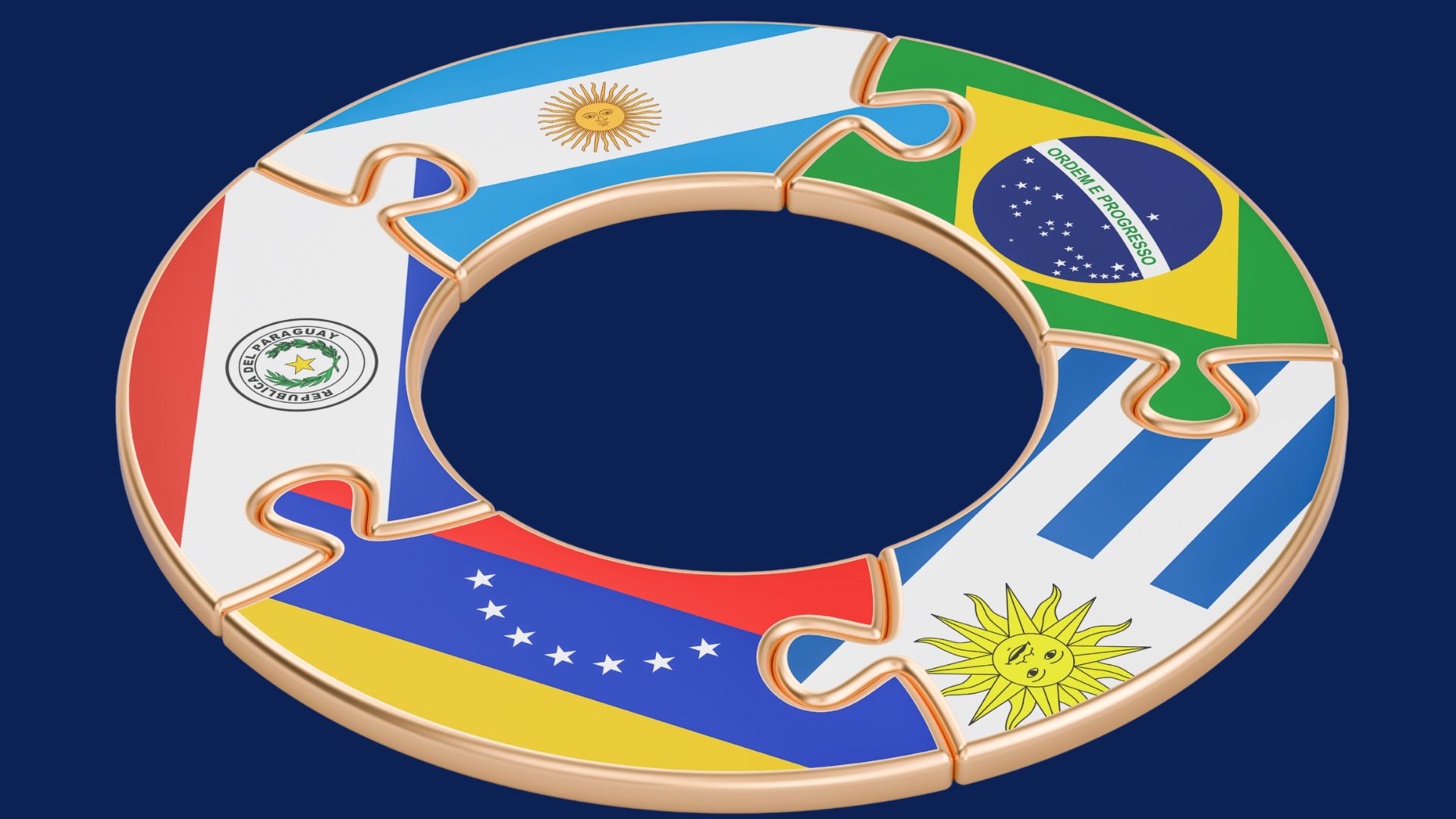
On May 1, the trade agreement between the European Union and the four Mercosur countries — Brazil, Argentina, Uruguay and Paraguay — enters into force on a transitional basis. From that date, the gradual elimination of duties on more than 91 percent of products exported by the EU will begin, with an estimated saving of billions of euros for European companies. The immediate benefits will concern in particular the automotive, machinery, chemical and agri-food sectors.
The trade agreement, which will involve 700 million consumers, in addition to the removal of tariff barriers, will create jobs and trade opportunities, and will also ensure compliance with European regulations. According to the Commission’s estimates, by 2040, the agreement can lead to an increase in the RBP of the UR of over 70 billion and an increase in European exports of 40%.
The agreement with Mercosur is not an isolated case. Over the past year, the European Union has significantly accelerated the conclusion of trade agreements with many partners around the world, in direct response to the tariff policy adopted by the US administration and the desire of many countries to consolidate preferential trade relations. These agreements go far beyond simply reducing customs tariffs: they aim to create more favourable regulatory and structural conditions for exports.
No trade deal only produces winners. On the European side, the main obstacle came from the agricultural sector. Mercosur counts among the world’s most competitive producers of beef, poultry, soybeans, sugar and ethanol. The opening of the European market to these products — even partial, and with quotas — has met with organized resistance from European farmers, one of the most influential lobbies in Community policy. France, Ireland, Poland and Austria, the countries with the most exposed agricultural supply chains, have repeatedly blocked or slowed down the Commission’s negotiating mandate. In fact, behind the agricultural protests there is also a more ambitious goal: to amend the Commission’s proposals on the 2028-2034 Multiannual Financial Framework, which provide for a partial renationalisation of the common agricultural policy. The motivation of the majority of the European Parliament to postpone the vote pending the ruling of the Court of Justice before ratifying the agreement as a whole reflects, in part, these same concerns.
On the other hand, the greatest resistance came from the industrial and regulatory sectors. Brazil and Argentina have manufacturing industries — in the automotive, electronics and textile sectors — built and developed under high protective barriers. The opening up to European competition, even if gradual, risks affecting consolidated production sectors and the jobs linked to them. Regulatory asymmetries represent another critical issue: European standards on food safety, intellectual property and public procurement are perceived as non-tariff barriers capable of limiting real access to the European market, regardless of the reduction of duties.
In addition to the strictly trade part, the Commission has negotiated and received the agreement of the four Mercosur states on a more ambitious partnership agreement, which will have to receive the unanimous approval of national governments and parliaments before it can fully enter into force.
The key elements of the partnership agreement are the so-called non-tariff chapters. For example, the chapter dedicated to trade and sustainable development, where the systematic violation of climate commitments by one of the contracting parties could trigger the suspension of trade concessions. The agreement also includes a specific annex on deforestation, which binds both parties to prevent further deforestation of their territories and to adopt verifiable monitoring systems.
In terms of workers’ rights, the agreed provisions formally commit both parties to respect international labour conventions: freedom of association, the right to collective bargaining, the elimination of child and forced labour, non-discrimination in employment.
On these issues, the reactions have been diametrically opposed: in the European context, the rules have been criticized for the absence of automatic sanctions; in the Mercosur countries, on the contrary, the same provisions were judged to be too imposing and not very respectful of Latin American legal traditions. The balance is that the application of these rules is mainly based on diplomatic pressure and reputation, rather than on automatic sanction mechanisms. However, the agreement establishes an obligation of progressive improvement, verifiable over time.
Among the non-tariff measures there are also the recognition of products of origin, which will offer protection to over 350 European products, and about 200 products from Mercosur countries.
Despite this resistance, Europe remains an extraordinarily attractive market for exporting countries around the world. With 450 million consumers, the European Union has the strength to impose conditions on its imports that no individual state, however large, could afford to demand.
The provisional entry into force of the trade part of the agreement marks a historic step. Two economic areas that together have over 700 million consumers are starting an integration process aimed at redesigning trade flows between Europe and Latin America.